What Is the Right Chair Size and How Do You Measure It?

Time:2026-09-29 Author:Mason
0%

Choosing a chair by appearance alone can leave your knees cramped, feet unsupported, or shoulders tense after a short sitting session. The right size depends on your body, posture, and how you plan to use the chair. A desk chair, dining chair, and reading chair may each call for a different fit. Small details matter.

This guide explains How to measure a person for the right chair size, then compare those measurements with a chair’s listed dimensions. Start with a tape measure and a firm seat, wearing the shoes you usually wear while sitting. Note your seated height, hip width, and the distance from the back of your hips to the bend behind your knees. These measurements can help you assess seat height, width, and depth. Check whether your feet rest flat and whether the seat edge presses into your legs. Comfort is personal.

Chair specifications are not always presented in the same way, so compare the actual seat dimensions rather than relying on labels like “standard” or “large.” Armrests, cushions, and adjustable parts can also change the usable space. Measure twice if a result seems surprising; tape measures slip, and posture shifts. Even careful measurements cannot predict every comfort preference. Treat them as a practical starting point, then consider sitting in the chair when possible. A well-sized chair should support your body without forcing you to perch, stretch, or hunch.
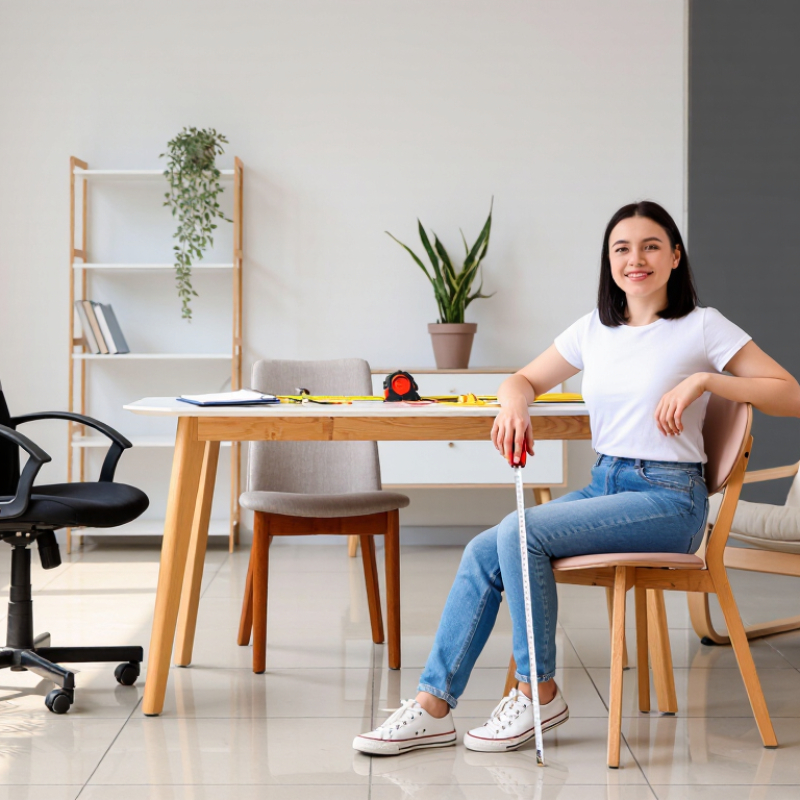
What Is the Right Chair Size and How Do You Measure It?

Key Chair Dimensions and What They Measure

What Is the Right Chair Size and How Do You Measure It?

Chair comfort depends on several dimensions, not just overall height. Seat height measures the distance from the floor to the top of the seat cushion. When seated, your feet should rest flat, with your knees near a right angle. A seat that is too high can leave your feet unsupported. A low seat may strain your knees.

Seat depth measures the distance from the front edge to the backrest. Leave about two to three fingers of space behind your knees. Seat width should support your hips without pressing your sides. Measure your body while wearing normal indoor clothing.

My first estimate was wrong because I measured standing, not sitting. Backrest height shows how much support reaches your shoulders. Armrest height should let your elbows rest naturally, without lifting your shoulders. Measure from the seat surface to the armrest top.

Tips: Use a firm tape measure and record every number in centimeters or inches. Sit on a similar chair for five minutes before choosing dimensions. Check the cushion thickness, because soft padding reduces usable seat height. A chair may fit the measurements but still feel unsuitable. Personal posture, desk height, and daily sitting time can change the result. Test movement, too. Turn, lean, and stand up. A perfect measurement does not always create perfect comfort.

Assessing the User, Room, and Intended Use

What Is the Right Chair Size and How Do You Measure It?

A chair should fit the person, not only the room. Start with the user’s height, hip width, leg length, and daily posture. Measure hip width while seated, then add roughly 5–10 centimetres for comfortable movement. Seat height matters too. When feet rest flat, knees should sit near a right angle. If the feet dangle, the chair is too high. If the knees rise sharply, it may be too low.

Seat depth deserves careful attention. Sit fully back and leave two or three fingers between the seat edge and the knees. This supports the thighs without pressing behind them. I have found that a chair can look generous yet feel restrictive after twenty minutes. That detail is easy to miss. Consider the intended use. A work chair needs stable support and suitable armrest clearance. A dining chair should slide under the table. A lounge chair may allow deeper seating, but it still needs safe, easy standing.

Tips: Measure the available floor area, including space for pulling the chair out. Leave about 75 centimetres for comfortable movement where possible. Check doorways, table height, and nearby furniture before buying. Use masking tape to mark the chair’s footprint on the floor. It reveals problems quickly. Still, measurements are not everything; posture, clothing, and personal preference can change the result. Recheck them.

Measuring Seat Height, Width, and Depth

What Is the Right Chair Size and How Do You Measure It?

A chair can look spacious yet feel uncomfortable after ten minutes. Seat measurements often explain why. Measure seat height from the floor to the highest point of the compressed cushion. Sit naturally, with both feet flat and knees near a right angle. Your thighs should feel supported, not pressed upward. A seat that is too high can leave your feet dangling. That small gap may create pressure behind the knees.

Measure seat width across the widest usable area, not only between the armrests. Add a little space beside your hips, usually about 2 to 4 inches overall. This allows normal movement without making the chair feel unstable. Check the armrests too. Narrow armrests can make a wide seat feel surprisingly restrictive. Measure twice. Fabric edges and curved cushions can mislead the tape.

Seat depth runs from the backrest to the front edge. Sit fully back before measuring the space beneath your thighs. Ideally, leave about two or three fingers between the seat edge and your knees. Too much depth may encourage slouching. Too little can reduce leg support. Cushions also soften with use, so a perfect showroom measurement may change later. A tape measure cannot capture every posture, and personal comfort sometimes challenges the numbers.

Measuring Backrest, Armrests, and Overall Chair Size

Choosing the right chair size starts with the person, not the product label. A comfortable chair should support your posture without lifting your shoulders. Measure your available space, then measure the chair itself. Record its widest width, full depth, and total height. Include wheels, controls, and curved parts. These details are easy to miss. Leave at least two inches beside each armrest for movement and cleaning.

For backrest measurement, place the chair upright on a flat floor. Measure from the seat surface to the backrest’s top, following the center line. Note the usable width between side supports, not only the outer width. A high back may support taller users, but excessive height can press against your head or desk. Check seat height too. Your feet should rest flat, with knees near a right angle. Measure armrest height from the floor and from the seat. Then measure the gap between the armrests. Your elbows should stay close to your body.

I once measured a chair without including its rear curve and underestimated its depth by several centimeters. That mistake made a tight room feel even smaller. Measure again with cushions compressed and the backrest adjusted normally. Use one measurement unit throughout. Small errors matter. If two people share the chair, use the larger body measurements and test the adjustment range. Numbers guide the choice, but a ten-minute trial can reveal pressure behind your knees or unsupported shoulders.

What Is the Right Chair Size and How Do You Measure It?

Typical adult task-chair measurement ranges in inches

How to measure: Measure seat height from the floor to the top of the compressed seat cushion. Measure seat depth from the front edge to the backrest. Measure backrest height from the seat surface to the top of the backrest. Measure armrest height from the seat surface to the top of the armrest. Overall chair width is measured across the widest point, including the armrests.

These ranges are general ergonomic guidelines for adult task chairs. The correct size depends on the user’s height, leg length, desk height, posture, and available space.

Comparing Measurements for Fit and Clearance

What Is the Right Chair Size and How Do You Measure It?

A well-sized chair should support your body without trapping it. In my experience, seat height affects comfort more than appearance. Measure from the floor to the seat’s highest usable point. Your feet should rest flat, with knees close to a right angle. Leave about two fingers of space behind your knees. Small differences matter.

Seat width must fit your hips and allow natural movement. Measure across the widest part of your seated body, then add several centimeters for clothing and posture changes. Seat depth requires care. Sit fully back and measure from your lower back to the knee crease. The seat should support most of your thighs without pressing behind your knees. A number can still mislead.

Clearance measurements are just as important as fit measurements. Check the space beneath your desk, including the armrests and chair base. Compare the chair’s total height with the desk’s underside. Allow room to pull the chair out without scraping nearby furniture. Behind the chair, leave enough clearance for reclining and standing. I once measured the seat correctly but forgot the armrests. That mistake made the chair unusable at my desk. Measure twice. Test the chair in your actual room, wearing normal shoes and everyday clothing. Bodies shift, furniture varies, and perfect measurements remain an imperfect guide.

FAQS

How do you measure seat height correctly?

Measure from the floor to the highest point of the compressed cushion. Keep both feet flat. Knees should stay near a right angle.

What happens if the seat is too high?

Your feet may dangle, creating pressure behind your knees. A small gap can become uncomfortable after ten minutes.

How much seat width is usually needed?

Measure the widest usable area across the seat. Allow about 2 to 4 inches beside your hips for natural movement.

How do you measure seat depth?

Sit fully back against the backrest. Leave two or three fingers between the seat edge and your knees.

Why can a deep seat cause discomfort?

Excessive depth may encourage slouching. Too little depth can reduce thigh support. The numbers are not always enough.

How should backrest height be measured?

Measure from the seat surface to the top of the backrest. Follow the center line on a flat floor.

What armrest measurements should you check?

Measure armrest height from the seat and floor. Your elbows should rest naturally without lifting your shoulders.

How can you check whether the chair fits your room?

Record the widest width, full depth, and total height. Include curves, wheels, controls, and adjusted backrests. Leave two inches beside each armrest.

Should you trust measurements or test the chair?

Use measurements as a guide, then sit for about ten minutes. Turn, lean, and stand up. I once missed a rear curve and underestimated depth. That mistake made a small room feel tighter.

Conclusion

Choosing the right chair size starts with understanding the key dimensions: seat height, width, and depth, as well as backrest height, armrest position, and the chair’s overall footprint. How to measure a person for the right chair size involves considering their height, body proportions, and preferred sitting posture. The chair should support a comfortable, balanced position, with feet resting naturally and enough room to sit without feeling cramped.

Room size and intended use matter just as much as personal fit. Measure the space where the chair will go, including clearance needed to move around it or pull it out from a table. Compare these measurements with the chair’s dimensions, taking account of armrests, nearby furniture, and how the chair will be used. A careful comparison helps ensure the chair fits both the user and the room.

Mason

Mason

Mason is a seasoned marketing professional with a deep expertise in the company's offerings and a passion for driving brand awareness. With a strong background in digital marketing strategies, he has an innate ability to connect with diverse audiences and effectively communicate product benefits.......